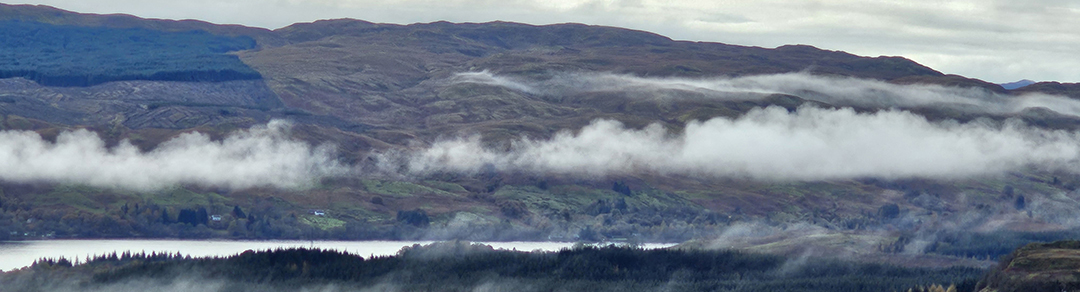
Weather in Scotland
Weather is massive topic and has huge impact o outdoor activities. We will try to understand little bit about weather in Scotland. But Scotland’s climate is actually quite moderate though changeable. As the old Scottish saying goes, 'there's no such thing as bad weather, only the wrong clothes!'.

Summer in Scotland: June, July and August are normally considered as a summer month due to average temperature, with average maximum temperatures ranging from approximately 15-17°C (or 59-63 °F). Lerwick in Shetland has about four hours more daylight at midsummer than London. At this time of year there is actually no complete darkness in the far north of Scotland.

AUTUMN: The colours of autumn are absolutely awesome in Scotland due to it's vibrant colours, the trees change from green to fiery reds, oranges and yellows. It's a perfect time of year to show your camera skills. During autumn, Scotland is likely to experience temperatures ranging from around 8-15°C (46-59°F) from September to November.

WINTER: Generally during December, January and February are the coldest months in Scotland, with the average maximum temperature usually around 5°C (41°F). But again snow some time can be fall during March as well on higher grounds. The average number of days with snow falling in Scotland ranges from 10-20 days. However, the peaks and mountains of the Highlands experience more days of falling snow. The snowsports season varies each year, but generally it runs from November to April. Scotland's five ski centres Cairngorm, Glencoe, Glenshee, The Lecht and Nevis Range provide some of the best value snowboarding and skiing in Europe.
SPRING: March, April and May are the spring months. The countryside comes to life again, with fields full of lambs and wildflowers. Maybe surprising to know, but April is on average the driest month of the year but also the most changeable.
UNDERSTANDING WEATHER


KEEP IN MIND
Altitude factor: As altitude increases, temperature decreases. Various factors are responsible for this, including air pressure and water-vapour content. With every 100 metres, the temperature drops by an average of 0.65°C. Where the air is very dry, such as in an area of high pressure, the air can cool by almost 1°C per 100 metres.
Wind chill factor takes into account wind speeds and humidity to assess how the human body actually feels temperature or Wind chill is the sensation of cold produced by the wind for a given ambient air temperature on exposed skin as the air motion accelerates the rate of heat transfer from the body to the surrounding atmosphere. Its values are always lower than the air temperature in the range.
Understanding Clouds:
